 |
Box2D Binary Counter
Game Physics with a 2D Physics Engine
|
Loading...
Searching...
No Matches
|
Box2D Binary Counter
Game Physics with a 2D Physics Engine
|
The game class.
#include <Game.h>
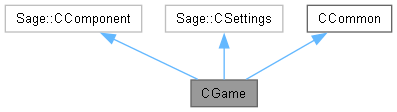
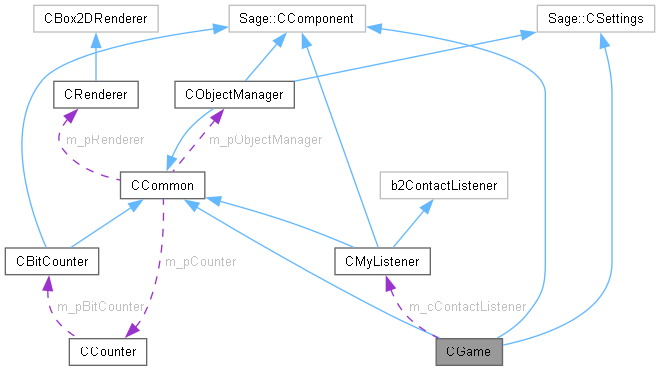
Public Member Functions | |
| ~CGame () | |
| Destructor. | |
| void | Initialize () |
| Initialize the game. | |
| void | ProcessFrame () |
| Process an animation frame. | |
| void | Release () |
| Release the renderer. | |
Private Member Functions | |
| void | LoadSounds () |
| Load sounds. | |
| void | BeginGame () |
| Begin playing the game. | |
| void | KeyboardHandler () |
| The keyboard handler. | |
| void | RenderFrame () |
| Render an animation frame. | |
| void | BeginSpeaking () |
| Begin saying the current number in binary. | |
| void | ProcessSpeaking () |
| Process saying the current number in binary. | |
| void | ProcessState () |
| Process game state. | |
Private Attributes | |
| CMyListener | m_cContactListener |
| Contact listener. | |
| bool | m_bSpeaking = false |
| Is currently saying the current number. | |
| bool | m_bSpoken = true |
| Has finished saying the current number. | |
| float | m_fSayBitTimer = 0 |
| Timer to delay saying the next bit. | |
| int | m_nCurBit = 0 |
| Index of the bit currently being said. | |
Additional Inherited Members | |
 Static Protected Attributes inherited from CCommon Static Protected Attributes inherited from CCommon | |
| static b2World * | m_pPhysicsWorld = nullptr |
| Pointer to Box2D Physics World. | |
| static CRenderer * | m_pRenderer = nullptr |
| Pointer to the Renderer. | |
| static CObjectManager * | m_pObjectManager = nullptr |
| Pointer to the Object Manager. | |
| static Sage::CParticleEngine2D * | m_pParticleEngine = nullptr |
| Pointer to particle engine. | |
| static eGameState | m_eGameState = eGameState::Loading |
| Current game state. | |
| static CCounter * | m_pCounter = nullptr |
| Pointer to a counter. | |
| static UINT | m_nCurNum = 0 |
| Current number. | |
| static eDrawMode | m_eDrawMode = eDrawMode::Sprites |
| Draw mode. | |
| CGame::~CGame | ( | ) |
Delete the Renderer and the Object Manager. Also delete Physics World, which MUST be deleted after the Object Manager because of way things are set up.
|
private |
Clear any old objects out of the Object Manager and create the edges of the game world, which correspond to the edges of the window.


|
private |
Begin the speaking process by setting the flag, setting the current bit to the most-significant one, and zeroing out the timer so that the first bit is said immediately.


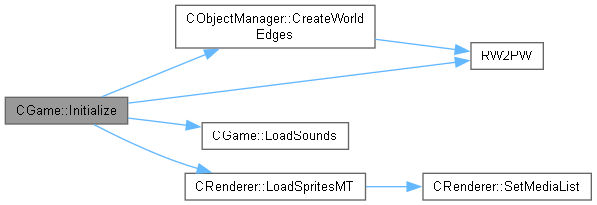
| void CGame::Initialize | ( | ) |
Initialize the Renderer and the Object Manager, load images and sounds, start the timer, and begin the game.

|
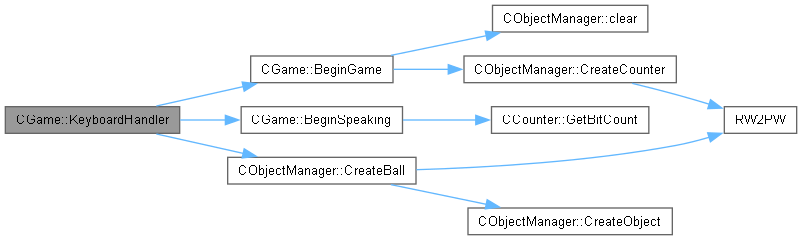
private |
Poll the keyboard state and respond to the key presses that happened since the last frame.

|
private |
Load the sounds for this game.

| void CGame::ProcessFrame | ( | ) |
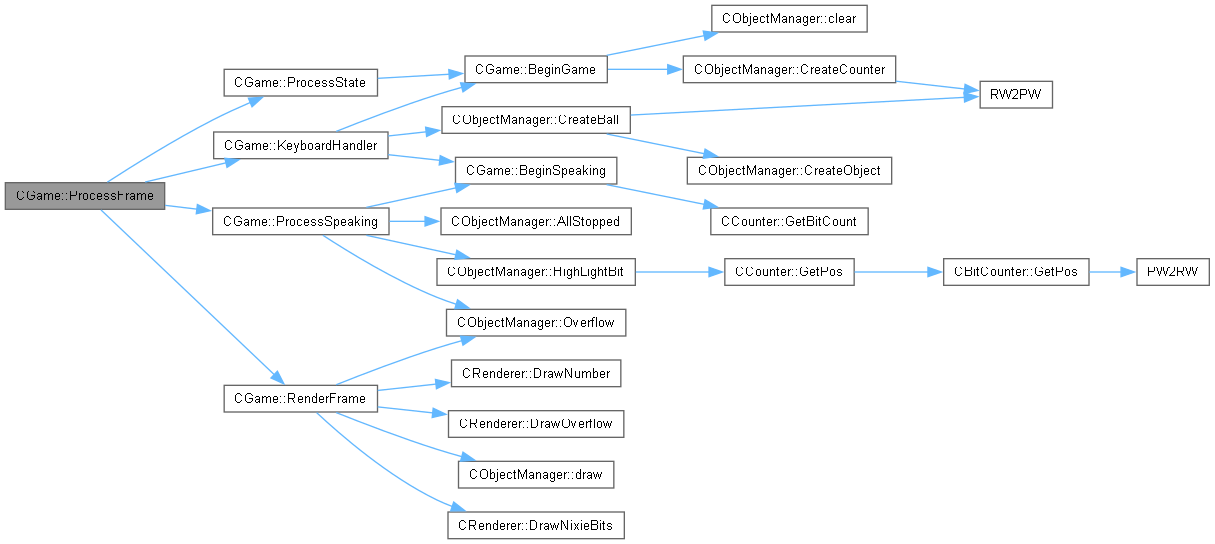
Handle keyboard input, move the game objects and render them in their new positions and orientations. Notify the timer of the start and end of the frame so that it can calculate frame time.

|
private |
Do the processing and preparation necessary for saying the current number out loud in binary form. This function should be called once per frame.


|
private |
Take action appropriate to the current game state.


| void CGame::Release | ( | ) |
Release all of the DirectX12 objects by deleting the renderer.

|
private |
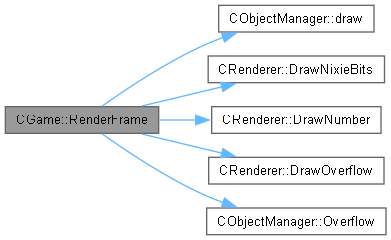
Ask the Object Manager to draw the game objects. RenderWorld is notified of the start and end of the frame so that it can let Direct3D do its pipelining jiggery-pokery.

 1.12.0